How Installment Financing Influences Technology Upgrade Cycles for Small Business Operators
Jordan Braun · Oct 27, 2026
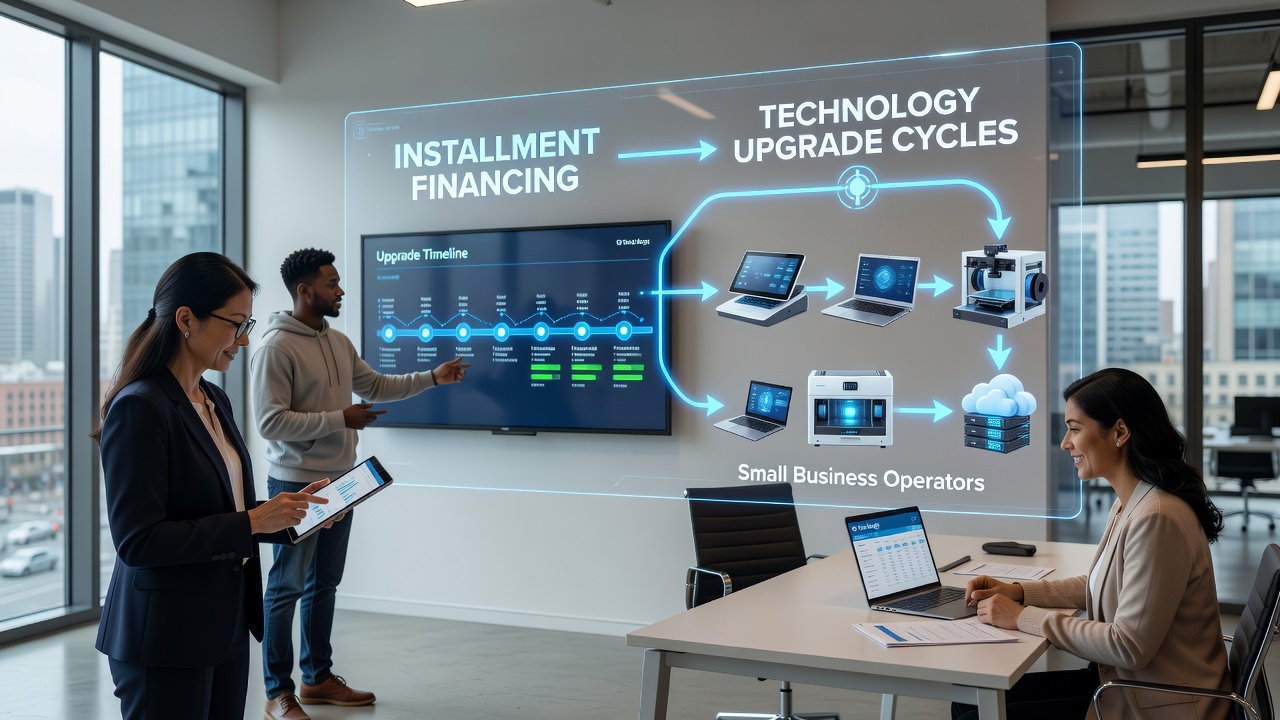
How Installment Financing Influences Technology Upgrade Cycles for Small Business Operators
Small business operators often turn to installment financing when replacing or expanding their technology infrastructure, and this approach directly affects the timing and frequency of those upgrades. Data from industry reports shows that businesses using structured payment plans tend to schedule equipment refreshes at more consistent intervals rather than waiting for large cash reserves to accumulate. Research indicates that access to monthly payment structures reduces the average time between major technology purchases by spreading costs across predictable periods, which in turn supports steadier operational improvements.
Patterns in Financing Adoption Among Small Enterprises
Observers note that installment arrangements appear most frequently when operators need point-of-sale systems, cloud-based accounting software, or specialized hardware such as inventory scanners. Figures from recent surveys reveal that nearly half of small firms opting for these plans complete technology upgrades within 18 to 24 months, compared with longer gaps observed among businesses relying solely on cash purchases. This acceleration occurs because operators can align payments with revenue cycles, allowing them to maintain cash flow while still refreshing equipment before obsolescence becomes a constraint.
Take one retailer who adopted an installment plan for new tablets and inventory management software in early 2025. That business completed a subsequent hardware refresh by October 2026, a timeline shorter than its previous four-year cycle. Researchers tracking similar cases across multiple sectors find that payment flexibility correlates with more frequent evaluations of technology needs, as operators monitor performance metrics without the pressure of immediate full payment.
Effects on Cash Flow and Upgrade Timing
Studies conducted by academic institutions demonstrate that installment structures help stabilize monthly outflows, which in turn influences when operators decide to invest in newer systems. Data shows businesses using these mechanisms often time upgrades to coincide with seasonal revenue peaks, allowing them to absorb the initial setup costs while maintaining reserves for ongoing operations. According to the U.S. Small Business Administration, small firms that utilize installment options report fewer instances of deferred maintenance on critical technology compared with those dependent on lump-sum financing.
What's interesting is how this pattern extends across different regions and industries. Canadian and Australian trade data similarly indicate that operators in retail, hospitality, and professional services accelerate hardware replacements when payment terms match their typical billing cycles. European Commission analyses of SME financing further highlight that structured installments correlate with higher rates of software subscription renewals, since the predictable cost structure reduces uncertainty around budgeting for recurring technology expenses.

Technology Categories Most Affected
Hardware such as laptops, servers, and specialized equipment sees the clearest shift in upgrade frequency under installment models. Research indicates that operators replace these items at intervals averaging 24 to 30 months when payments are spread out, whereas cash-only approaches often stretch those cycles beyond three years. Software platforms follow a parallel trend, with subscription-based tools seeing earlier migrations to updated versions because financing covers both hardware and licensing bundles.
One manufacturing firm documented in industry case studies illustrates the shift clearly. After switching to installment financing for its network infrastructure in 2024, the company initiated a partial server upgrade in mid-2026 rather than waiting for full depreciation of the older equipment. Observers tracking these decisions note that the ability to forecast payment amounts encourages proactive planning instead of reactive replacements triggered by failures.
Regional and Sector Variations Observed
Reports from various government agencies show differences by location and business type. In the United States, retail and service operators lead in adopting installment plans for technology, while manufacturing firms show steadier but slower uptake. UK and EU data compiled by national statistical offices reveal comparable patterns, with hospitality businesses demonstrating the shortest upgrade intervals when financing options align with seasonal cash flows. Academic papers examining these trends emphasize that sector-specific revenue patterns play a larger role than firm size alone in determining how quickly operators move to newer systems.
Additional figures from October 2026 indicate continued growth in installment usage among small operators seeking to integrate AI-assisted tools and updated cybersecurity measures. These upgrades often occur alongside hardware refreshes, creating bundled financing arrangements that further compress traditional replacement timelines.
Conclusion
Installment financing continues to reshape technology upgrade cycles by enabling more predictable budgeting and shorter intervals between equipment acquisitions. Available data from multiple regions confirms that operators who utilize these structures tend to maintain more current technology profiles, with measurable effects on operational efficiency across retail, manufacturing, and service sectors. As financing options evolve, patterns observed through 2026 suggest ongoing adjustments in how small businesses time their technology investments relative to cash availability and revenue stability.