Mapping Connections Between Phased Settlement Protocols and Capital Reserve Strategies Among Seasonal Service Providers in Emerging Markets
Bianca Bennett · Nov 10, 2026
Mapping Connections Between Phased Settlement Protocols and Capital Reserve Strategies Among Seasonal Service Providers in Emerging Markets
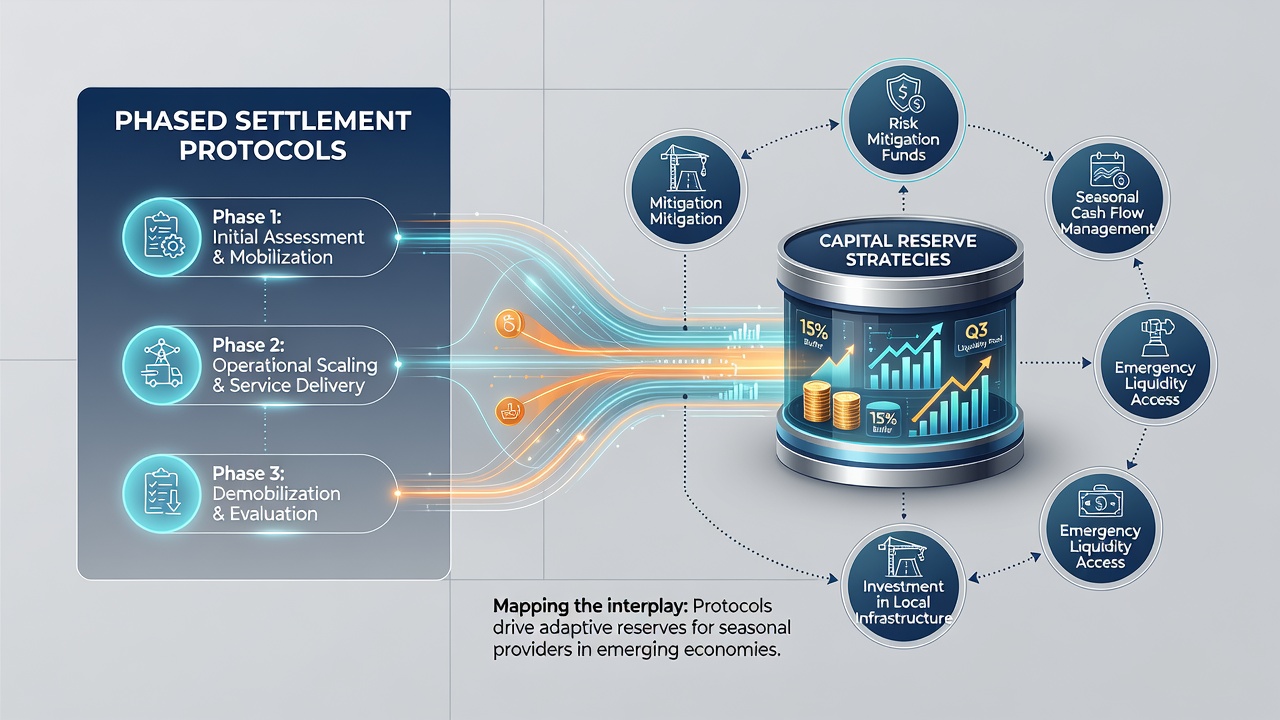
Seasonal service providers in emerging markets operate under tight cash flow cycles that tie directly to weather patterns, harvest windows, and tourist influxes, and many turn to phased settlement protocols to spread incoming payments across multiple intervals while simultaneously maintaining capital reserves for off-peak periods. These protocols allow operators such as agricultural equipment lessors in Southeast Asia or eco-tour guides in East Africa to receive portions of fees in advance, during service delivery, and after completion, which aligns revenue timing with expense schedules that include fuel, labor, and equipment maintenance. Observers note that capital reserve strategies often emerge as a direct response to these staggered inflows, with providers allocating a fixed percentage of each settlement tranche into dedicated accounts that cover fixed costs when demand drops.
Core Elements of Phased Settlement Protocols
Phased settlement protocols typically divide contract value into three or four segments that correspond to milestones such as booking confirmation, mid-cycle progress, and final delivery, and data from industry reports shows adoption rates climbing among small operators in Latin America and sub-Saharan Africa since 2023. Service providers use digital platforms to trigger automatic transfers at each stage, which reduces default risk while giving clients predictable outlays; researchers at the Asian Development Bank have documented how these structures stabilize working capital for firms handling monsoon-dependent logistics in Vietnam and Indonesia. The approach also creates natural checkpoints where providers reassess reserve levels before committing to the next phase, allowing adjustments if early collections fall short of projections.
Capital Reserve Practices in Seasonal Contexts
Capital reserves function as buffers that providers build during high-volume months to cover lean periods, and studies indicate that operators who link reserve targets to settlement schedules maintain liquidity ratios 15 to 20 percent higher than those relying on lump-sum collections. In practice, a coastal tourism outfit in Kenya might direct 25 percent of each phased payment into a short-term deposit instrument that matures before the low season begins, while a similar provider in Peru applies the same percentage toward equipment depreciation funds. November 2026 data from regional chambers of commerce reveals that firms synchronizing these reserves with protocol milestones experienced fewer interruptions during shoulder seasons compared with prior years, largely because the staggered inflows matched recurring obligations such as insurance renewals and staff retention bonuses.
Interconnections and Operational Mapping
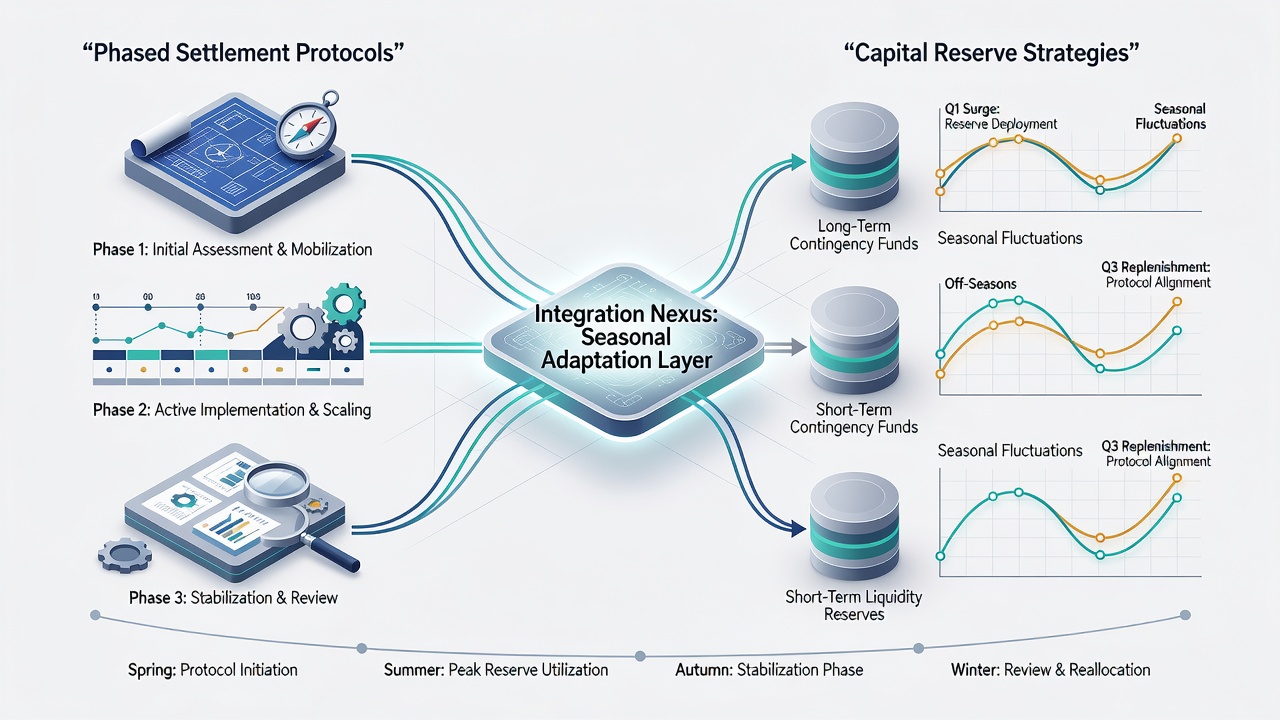
The mapping between phased settlements and reserve strategies reveals several feedback loops where settlement timing influences reserve accumulation speed and reserve size in turn affects willingness to offer flexible payment terms to clients. When a provider receives an early tranche, it can immediately seed the reserve account, which then earns modest interest that offsets inflation in markets like Nigeria or Bangladesh; conversely, delayed final settlements sometimes force temporary draws from reserves, prompting operators to tighten subsequent contract phases. Experts tracking these dynamics point to software tools that visualize cash flow projections by overlaying settlement calendars onto reserve requirement models, enabling real-time reallocation decisions without disrupting service delivery. One study from a Latin American research institute found that providers using such integrated mapping reduced emergency borrowing by nearly one-third over two seasonal cycles.
Regional Patterns and Recent Developments
Across different emerging regions, the strength of these connections varies with regulatory environments and access to digital banking infrastructure, yet common threads appear in how providers adapt protocols to local seasonality. In South Asia, monsoon-driven agricultural service firms often front-load settlement phases to build reserves ahead of planting delays, whereas Andean tourism operators stagger collections to coincide with reserve drawdowns during political or weather-related disruptions. Figures released by the World Bank in late 2025 highlight that markets with stronger digital payment rails show faster reserve growth rates when protocols incorporate automated percentage transfers. Those patterns continued into November 2026 as providers refined their models based on the previous year’s performance data, incorporating inflation adjustments and currency fluctuation buffers directly into phase calculations.
Practical Implementation Examples
Take a fleet maintenance service in Ghana that serves fishing cooperatives during peak catch seasons: the firm structures settlements so that 40 percent arrives at contract signing, 30 percent at the midpoint of vessel servicing, and the final 30 percent upon delivery, with 18 percent of each tranche automatically routed to a reserve account earmarked for dry-season fuel stockpiling. Similar mechanics appear among mountain guiding companies in Nepal, where phased payments from international trekking groups fund reserves that cover guide salaries and permit renewals during winter closures. Observers tracking these cases note that the explicit linkage between settlement percentages and reserve targets creates accountability loops that external lenders increasingly recognize when extending working capital lines.
Conclusion
Phased settlement protocols and capital reserve strategies among seasonal service providers in emerging markets form an interconnected system where timing of inflows directly shapes the size and accessibility of buffers needed during off-peak intervals. Data collected through 2026 demonstrates that operators who align these elements through milestone-based allocations and automated transfers achieve more consistent liquidity across cycles. As digital tools improve and regional financial institutions refine support mechanisms, the mapping between these two practices continues to evolve in measurable ways that affect operational resilience for thousands of small providers across multiple continents.