Patterns in Payment Flexibility Usage Among Gig Economy Participants for Equipment Upgrades
Jordan Braun · Oct 13, 2026
Patterns in Payment Flexibility Usage Among Gig Economy Participants for Equipment Upgrades
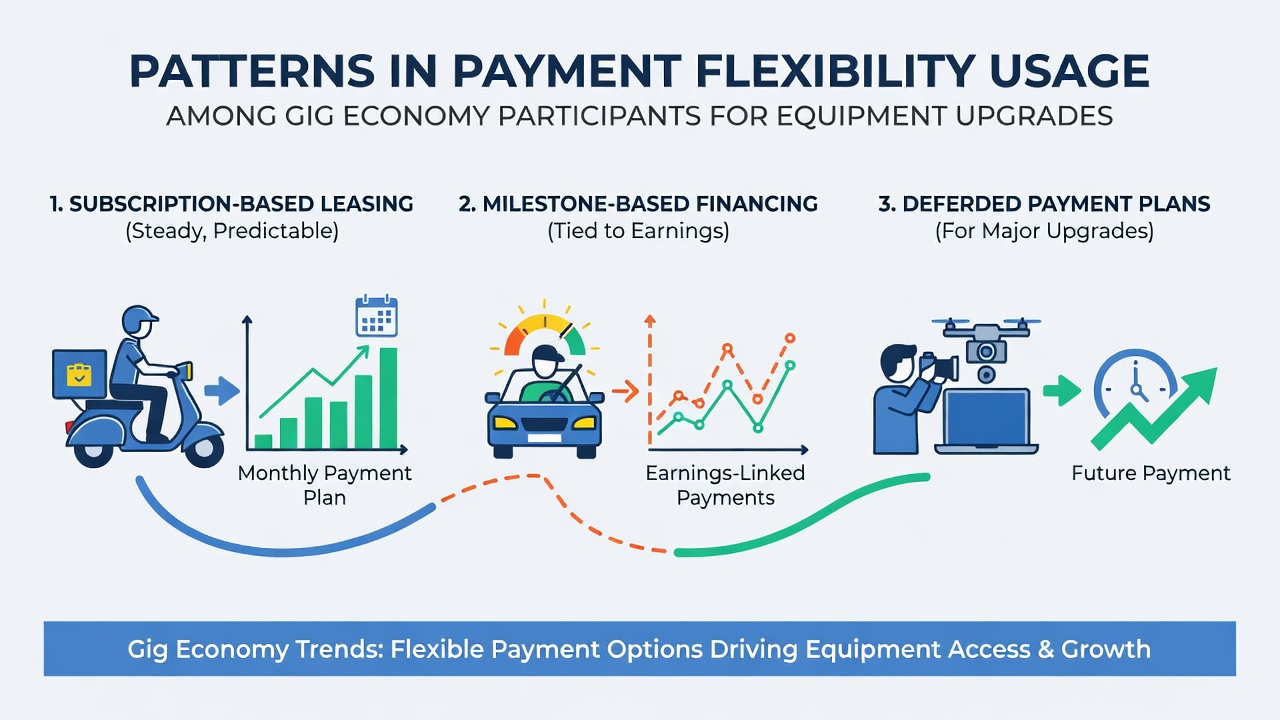
Researchers tracking labor market shifts have documented steady growth in how gig economy participants apply payment flexibility options when acquiring tools and machinery, and data from multiple regions show distinct patterns emerging by 2026. In October 2026, reports from labor statistics agencies highlighted that independent contractors in transportation, delivery, and creative services increasingly turned to installment structures and deferred options to manage cash flow around equipment purchases. These patterns reflect broader changes in how irregular income streams intersect with capital investment needs, and analysts note consistent behaviors across urban and suburban cohorts.
Core Trends in Equipment Acquisition
Studies from workforce research centers indicate that gig participants often select payment flexibility for items such as vehicles, cameras, laptops, and specialized software licenses, with usage rates rising in sectors where equipment directly affects earning capacity. Data collected through 2025 and into 2026 reveal that participants with monthly income variability above 40 percent relied on these mechanisms at higher frequencies than those with steadier project pipelines. Observers note that payment plans tied to revenue cycles allow users to align repayment schedules with peak earning months, and this alignment appears in records from both North American and European platforms.
One analysis of transaction data from major equipment retailers showed that delivery drivers upgraded vehicles using flexible terms at rates 25 percent higher than traditional wage earners during the same period. Similar patterns surfaced in creative industries, where freelancers financed editing rigs and recording gear through structures that adjusted based on project volume. Researchers have observed that these choices correlate with platform algorithms that reward consistent uptime, and participants who maintained equipment reliability through timely upgrades reported sustained access to higher-paying assignments.
Geographic and Sectoral Variations
Figures compiled by national statistics offices across different continents illustrate regional differences in adoption. In the United States, Bureau of Labor Statistics supplements from 2026 pointed to elevated usage among rideshare operators in metropolitan areas, while Canadian data from Statistics Canada showed parallel trends among short-term logistics contractors. European Union labor reports, drawing on harmonized surveys, found that participants in the United Kingdom and Germany applied payment flexibility most often for tech upgrades, whereas Australian Bureau of Statistics releases noted stronger patterns in agricultural and trades equipment financing.
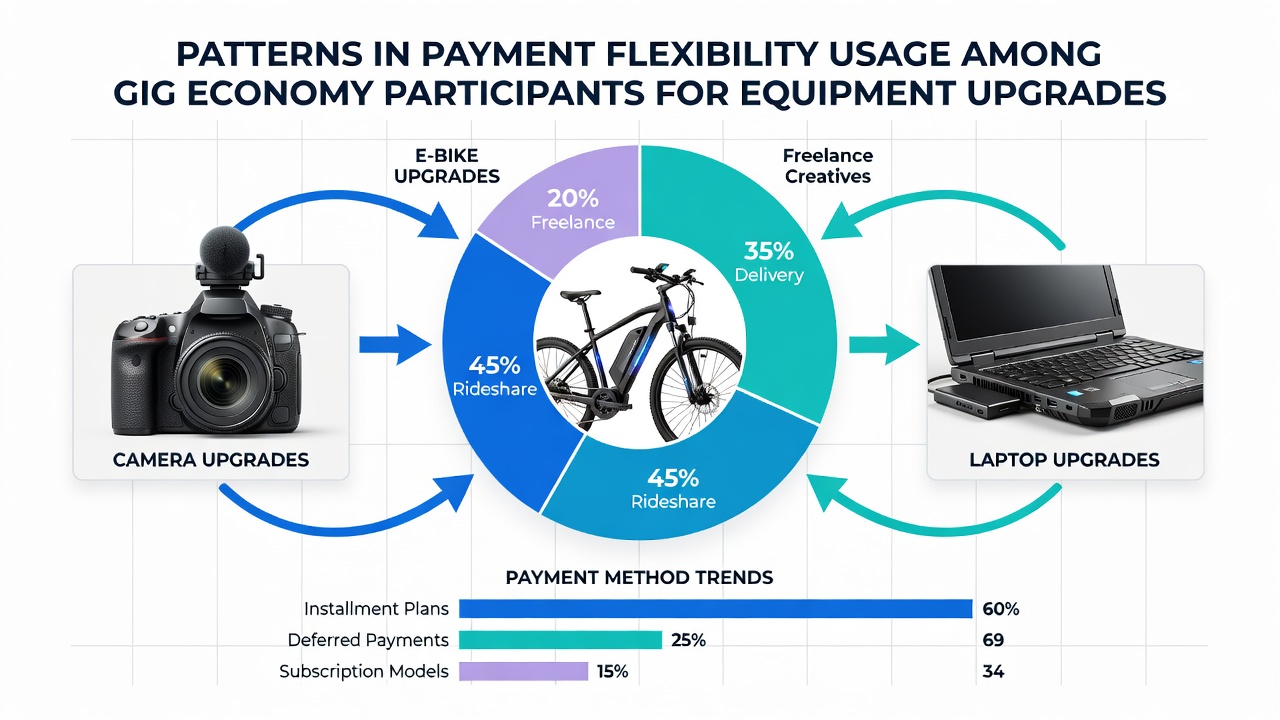
What's interesting is how these variations tie into local regulatory environments and platform policies, and cross-border comparisons suggest that tax treatment of equipment deductions influences timing decisions. Participants in regions with favorable depreciation rules scheduled upgrades earlier in fiscal years, and data sets from October 2026 confirmed clusters of activity around tax filing deadlines. Industry reports from organizations such as the OECD further contextualize these movements by linking payment flexibility uptake to broader self-employment growth rates.
Influencing Factors and Behavioral Indicators
Evidence from longitudinal studies points to several drivers behind observed patterns, including platform payout frequency, equipment depreciation rates, and access to credit scoring alternatives. Gig participants who received weekly disbursements tended to favor shorter installment windows, whereas those on monthly cycles extended terms to match revenue receipt. Research indicates that credit history limitations common among newer entrants also steer choices toward flexible products that evaluate alternative repayment signals such as platform ratings and transaction history.
Take one case documented in academic papers where a cohort of independent delivery workers in urban centers upgraded e-bikes and insulated cargo boxes ahead of seasonal demand spikes, and repayment data showed tight correlation with increased order volumes during those windows. Observers note that insurance requirements and warranty conditions further shape preferences, because certain flexible products bundle coverage that reduces out-of-pocket risk during breakdowns. Those who've examined transaction logs across multiple platforms find that repeat users often refine their selections after initial experiences, favoring providers that permit mid-term adjustments when income forecasts change.
Operational Impacts on Participants
Longer-term records demonstrate that payment flexibility usage correlates with measurable differences in equipment utilization rates and assignment acceptance patterns. Participants who upgraded through these channels maintained higher average weekly active hours according to aggregated platform metrics, and maintenance logs indicated fewer service interruptions when newer models replaced older units. Economic analyses from university research teams suggest that these outcomes stem from reduced downtime rather than direct income effects, and the patterns hold across income quartiles within the gig population.
Yet the same datasets reveal that participants who overextended terms relative to their income volatility encountered repayment strain during slower periods, prompting some to adopt hybrid strategies that combined flexible options with traditional savings buffers. Government statistical releases from multiple jurisdictions continue to track these dynamics, and October 2026 updates incorporated new variables around platform fee changes and fuel price fluctuations that altered upgrade calculus for vehicle-dependent workers.
Conclusion
Patterns documented through 2026 establish that gig economy participants apply payment flexibility for equipment upgrades in ways that reflect income structure, sector demands, and regional policy contexts. Continued monitoring by labor agencies and research institutions will clarify how these behaviors evolve alongside platform innovations and macroeconomic conditions, and existing data already provide clear baselines for comparison across time and geography.