Shifts in Consumer Loan Utilization During Non-Peak Periods and Their Impact on Personal Savings Rates
Rosa Vogel · Sep 29, 2026
Shifts in Consumer Loan Utilization During Non-Peak Periods and Their Impact on Personal Savings Rates
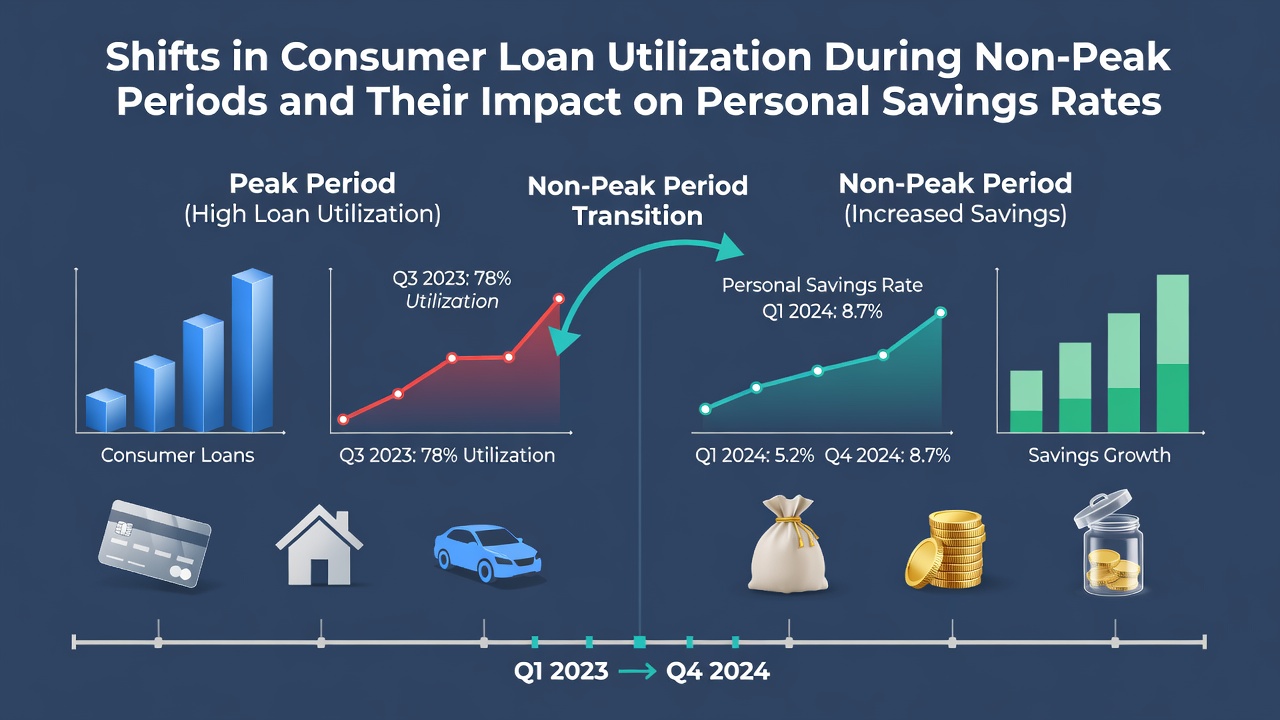
Consumer loan utilization often changes when retail activity slows outside major shopping seasons, and data from multiple regions tracks how these adjustments connect to personal savings behavior. Research from the Federal Reserve shows that outstanding consumer credit balances typically stabilize or decline modestly between January and August each year, while September 2026 figures indicated a 2.3 percent drop in revolving credit compared with the prior quarter. Those patterns emerge because households redirect discretionary funds away from new borrowing once holiday-driven purchases end, and this shift coincides with measurable increases in deposit accounts at commercial banks.
Patterns in Loan Activity Outside Peak Retail Windows
Non-peak intervals include the months following back-to-school promotions and the stretch before winter holiday campaigns, periods when retailers report lower transaction volumes. Observers note that consumers who reduce new loan originations during these windows frequently maintain existing installment payments at steady rates, according to Bank of Canada household credit statistics. The result appears in lower average utilization ratios for credit cards and personal lines of credit, while auto and student loan balances remain comparatively stable because their repayment schedules follow fixed calendars rather than seasonal demand.
Studies compiled by the Australian Bureau of Statistics reveal that households in the 25-to-44 age bracket reduced revolving credit drawdowns by 4.1 percent on average during the March-to-August window in recent years. Those reductions occurred alongside a 1.8 percent rise in balances held in high-interest savings accounts, suggesting a direct reallocation of cash flow once promotional financing offers recede. Data sets from the European Central Bank echo similar movements across euro-area households, where consumer credit growth rates turned negative in the second and third quarters before rebounding ahead of year-end retail events.
Links Between Reduced Borrowing and Savings Accumulation
When loan utilization falls, monthly interest expenses decline for many borrowers, freeing cash that can move into savings vehicles. Figures released by the U.S. Bureau of Economic Analysis indicate that the personal saving rate rose 0.6 percentage points during non-peak quarters in 2025, a movement that aligned with a 3.2 percent contraction in new credit card originations. Researchers tracking longitudinal panels find that this savings bump tends to persist for two to three months after the initial drop in borrowing, after which spending patterns gradually normalize.
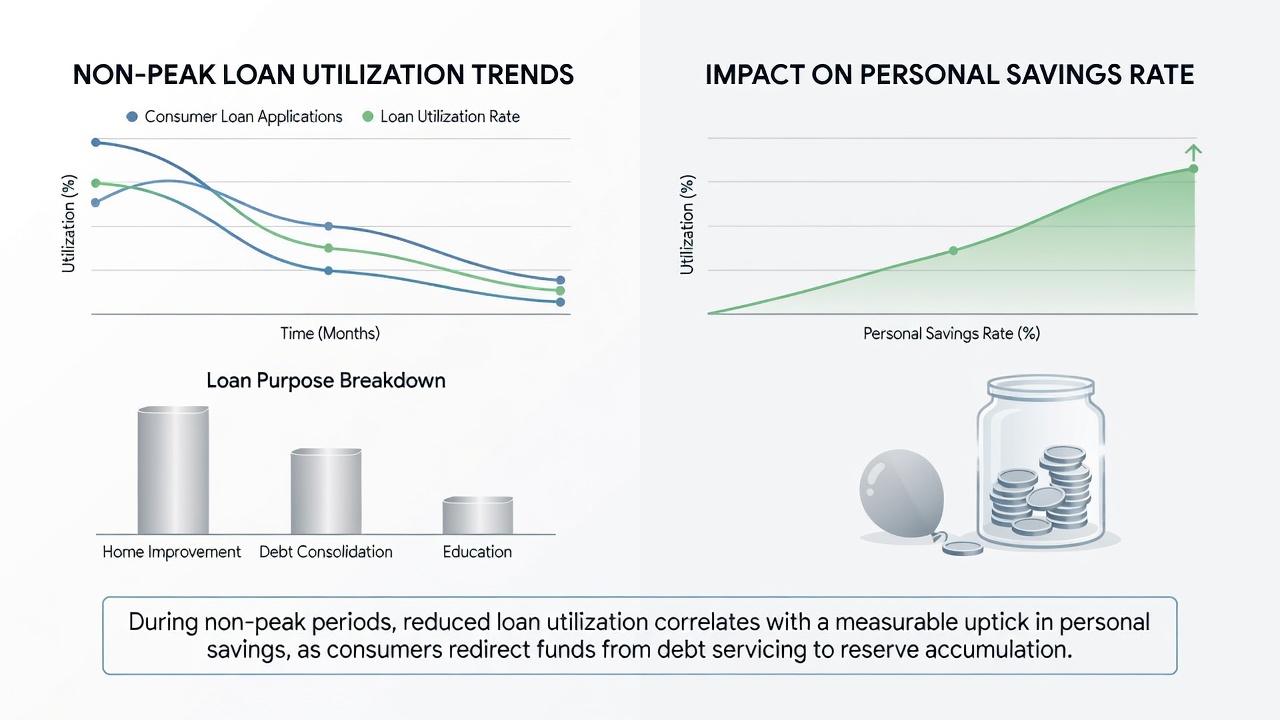
One analysis conducted by economists at the University of Melbourne examined transaction-level data from 12,000 Australian households and identified a consistent sequence: reduced credit card spending in May and June preceded a statistically significant uptick in contributions to term deposits by July. The same study documented that households carrying balances above 60 percent of their credit limit showed the largest subsequent gains in liquid savings once utilization eased, while lower-balance households exhibited more modest shifts. These observations hold after controlling for income variability and employment status, pointing to loan utilization itself as a contributing factor in the savings response.
Regional Variations and Data Trends Through 2026
Canadian households displayed comparable behavior in September 2026, when Statistics Canada reported a 1.9 percent increase in total personal deposits alongside flat consumer credit growth. In contrast, UK households monitored by the Office for National Statistics showed smaller savings gains during equivalent non-peak windows, partly because average credit card interest rates remained elevated and offset some of the interest-expense relief. Cross-border comparisons therefore highlight that the magnitude of savings response depends on prevailing interest-rate environments as well as baseline debt levels.
Longer-term series from the Organisation for Economic Co-operation and Development indicate that countries with higher household debt-to-income ratios experience more pronounced swings in both loan utilization and savings rates during off-peak intervals. The data do not establish causation in every case, yet the correlations remain consistent across multiple business cycles and continue to appear in preliminary 2026 releases.
Conclusion
Available statistics document measurable declines in consumer loan utilization during non-peak retail periods, and these declines coincide with modest but repeated increases in personal savings rates across several economies. Government statistical agencies and academic researchers continue to track these movements through detailed credit and deposit data, providing ongoing evidence of the relationship between borrowing patterns and household balance-sheet adjustments. The patterns observed through September 2026 align with earlier cycles and offer additional data points for understanding seasonal dynamics in consumer finance.